从训练到闲逛
From exercise to wandering
把场景落在起身、散步和随意走走,让参与从一个很小的动作开始。
Start with standing up, strolling and wandering, so participation begins with a small action.
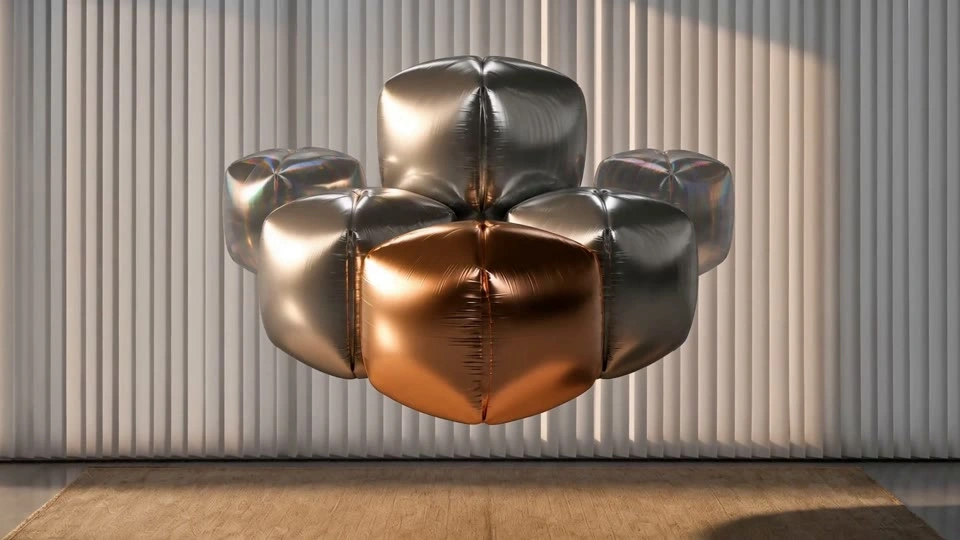
代号小酥肉
CODENAME XIAOSUROU
让你动动,陪你动动,想你动动。
A little nudge to move. A buddy to move with.
观看项目视频Watch the film ↘工作、学习、久坐,一天很容易就这样过去。我们想把“运动”放回日常:起身走走、闲逛片刻,或者带着一个小伙伴出门。
Work, study, another day spent sitting. We wanted to bring movement into everyday life: getting up, wandering for a while, or heading out with a little companion.
UUUMI 是一个有性格的漂浮式 AI 伙伴。第一台悠米,代号“小酥肉”,把对话、表情、动作和记录装进一个轻盈的身体里,邀请人们一起参与生活。
UUUMI is a floating AI buddy with a personality. The first one, codenamed Xiaosurou, brings conversation, expression, movement and little memories into a buoyant body, inviting people to join in.
一个月,把漂浮的想法带到现场。
One month to bring a floating idea to life.
在小红书 AI Builder Campus 第二季,我们从产品定义出发,完成软硬件实现、实体原型与现场展示,荣获一等奖。
At Xiaohongshu AI Builder Campus, Season 2, we took UUUMI from product definition through software, hardware, a physical prototype and a live presentation, earning First Prize.
UUUMI No.1 项目影片 · 产品形态、实机互动与模块化配置
UUUMI No.1 project film · Product form, physical interaction and modular configuration
我们把问题收敛为:怎样让人更容易开始动一动,也更愿意继续?
We focused on one question: how can moving become easier to start, and more inviting to continue?
把场景落在起身、散步和随意走走,让参与从一个很小的动作开始。
Start with standing up, strolling and wandering, so participation begins with a small action.
悠米有自己的性格和反应。对话、表情与动作,共同形成“有人想和我一起”的体验。
A distinct personality and responses make conversation, expression and movement feel like an invitation to join in.
漂浮带来柔和、轻盈的在场感;模块化组合让这个伙伴也能拥有不同的样子。
Buoyancy gives the companion a soft, light presence. Modular combinations give that presence a personal form.
从居家陪伴到出门走走,围绕同一个角色组织体验。
The same character connects companionship at home with the idea of heading out together.
聊几句,看看她的表情,感受身体的动作。人和悠米之间的互动,也成为从久坐中起身的一个契机。
A short conversation, a glance at her expression, a movement of her body. These small exchanges create an opening to get up and engage.
在散步的产品场景里,聊天、拍照和活动记录延续陪伴。声音、表情和身体反应,始终属于同一个小伙伴。
In the walking scenario, conversation, photos and activity notes extend the companionship. Voice, expression and physical response belong to the same little buddy.
角色表达由语义、节奏、表情和身体动作共同构成。
Character emerges through semantics, timing, facial expression and physical movement.
为表情建立进入、表演和返回的节奏,再与聆听、思考、说话和动作状态衔接,让角色表达保持连贯。
Authored entry, performance and return timing connects expressions with listening, thinking, speaking and movement states.
搭建表情工作台与制作规范,连接素材、语义映射、过渡预览和设备格式。该链路也用于 DeskBot,并为两个项目分别沉淀 skills 与表达规范。
An expression workbench and production standards connect assets, semantic mappings, transition previews and device formats. The pipeline also serves DeskBot, with project-specific skills and expression rules.
小酥肉也有不想出门的时候。最终展示里,天气成为一个性格彩蛋:陪伴有回应,也有她自己的节奏。
Sometimes Xiaosurou would rather stay in. The final presentation uses the weather as a character moment, giving companionship its own responses and rhythm.
把听见的一句话,变成声音、表情和身体的回应。以 ESP-Mosaico 为主机,连接小智对话、端侧感知与运动控制。
Turn a spoken request into voice, expression and physical response. ESP-Mosaico connects Xiaozhi dialogue with on-device perception and motion control.
系统如何协同
HOW THE SYSTEM CONNECTS
一句话,分成声音、表情和身体的回应。
One request becomes voice, expression and physical response.
麦克风 → WakeNet 唤醒 触摸屏幕也可进入会话
Microphone → WakeNet wake detection Touch can start the same session
通过 Wi-Fi 处理对话 连接语音回应与工具调用
Dialogue over Wi-Fi Voice responses and tool calls
音频流 → 音频服务 语义事件 → app_response
Audio stream → Audio worker Semantic events → app_response
语音、表情与动作分别计时,共同构成一次连贯的回应。
Voice, expression and motion have separate timing within one response.
从看见一个人,到决定怎样转向、升降和靠近。
From seeing a person to deciding how to turn, lift and approach.
人物检测 → 目标选择 持续更新当前人物框
Person detection → Target selection Refresh the current person box
水平偏差 → 转向请求 人物框大小 → 相对远近趋势
Horizontal error → Yaw request Box size → Relative near/far trend
协调表演、跟随与手动输入 结合姿态、相对高度计算输出
Coordinate performances, follow and manual input Use attitude and relative height
下一步:带动力跟随与长时高度采样的整机联调。
Next: powered follow and long-running height-sensor checks on the assembled airship.
把设备里的运行过程,带到手机和 P1 工作台。
Bring the device’s operation to the phone and P1 workbench.
与设备连接同一局域网 P1 通过同热点电脑桥接
Join the device’s local network P1 connects through a computer on the same hotspot
HTTP 建立配对会话 恢复凭据支持断线重连
Paired session over HTTP Resume tickets support reconnecting
手动指令 → 动作仲裁 设备状态与 JPEG 照片回传
Manual commands → Motion arbiter Device-state and JPEG photo transfer
P1 将场景、表情和硬件链路放在同一视图;跨设备热点联调持续推进。
P1 connects scenes, expressions and hardware paths in one view; hotspot integration testing continues.
音频服务负责采音与播放,Square Pop 播放器负责表情。身体动作执行时,新的语义仍可更新声音与表情;动作请求经仲裁处理,让角色持续回应。
The audio worker owns capture and playback; Square Pop owns expression playback. New semantics can update voice and eyes while a body movement completes, with body requests handled by the motion arbiter.
表演、视觉跟随与手动操作统一进入动作仲裁,由飞控结合传感器快照,再交给电机服务输出 PWM。指令超时、目标丢失或显式停止时,撤销推进。
Performances, visual follow and manual input meet at the motion arbiter. Flight control uses sensor snapshots, then one motor service owns PWM output. Expired requests, target loss and explicit stop withdraw propulsion.
语音工具调用触发 H2 抓拍 JPEG,配对手机通过局域网领取照片。活动记录、回顾、邀请与定时器沿着同一套对话工具链组织。
A voice tool call triggers an H2 JPEG capture, retrieved by the paired phone over the local network. Activity notes, recaps, invitations and timers use the same dialogue-tool path.
H1 的三组 GPIO PWM 接入 DRV8833,分别驱动转向、升降和前后推进。BMP581 与 PCA9685 使用外部 I²C 总线;PCA9685 通道 0 输出 SG90 信号。主机、推进与舵机分别组织供电,信号共地。
Three H1 GPIO PWM pairs connect to DRV8833 for yaw, lift and forward/reverse propulsion. BMP581 and PCA9685 use the external I²C bus; PCA9685 channel 0 drives the SG90 signal. Controller, propulsion and servo power use separate branches with a shared signal ground.
P1 将场景演示、表情工作台与硬件 Anatomy 放在同一屏。配对后读取表情帧、聆听状态、对话文本和电机指令,让交互与硬件的对应关系可以被直接观察。
P1 brings scene demos, the expression workbench and hardware Anatomy onto one screen. Paired telemetry exposes expression frames, listening state, dialogue text and motor requests, making the connection between interaction and hardware visible.
控制系统源码 ↗Control-system repository ↗将气球、硬件、线材与电池作为一套可组合的模块来设计。
Design balloons, hardware, wiring and batteries as one modular system.
气球通过魔术贴拼接,配套安装件承载主机、动力与电池。造型变化与部件固定在同一套结构里协调。
Velcro joins balloon modules, while dedicated mounts carry the controller, propulsion and batteries. Form variation and component attachment share the same structure.
结合造型偏好、模块需求和配重,通过网页配置探索不同组合,让个性化与实体条件一起进入方案。
A web configurator explores combinations of preferred form, module needs and balance, bringing personal choices and physical constraints into the same process.
我主导了从产品方向到系统实现的全过程,团队成员在各细分工作中协作支持。
I led the project from product direction through implementation, with teammates supporting the individual workstreams.
定义日常运动陪伴的方向、角色性格、场景与功能。
Defined the everyday-movement proposition, character, scenarios and features.
连接固件、表情、控制界面和硬件,沉淀可复用的制作链路。
Connected firmware, expressions, control interfaces and hardware, with a reusable production pipeline.
完成实体原型、模块化外观和最终项目展示。
Built the physical prototype, modular form and final project presentation.
从定义日常陪伴的方向,到让语音、表情、动作与实体配合起来,一个月的工作最终汇聚为现场的完整展示。
A month of work connected the everyday-companionship concept with voice, expressions, motion and a physical body, brought together in the live presentation.